
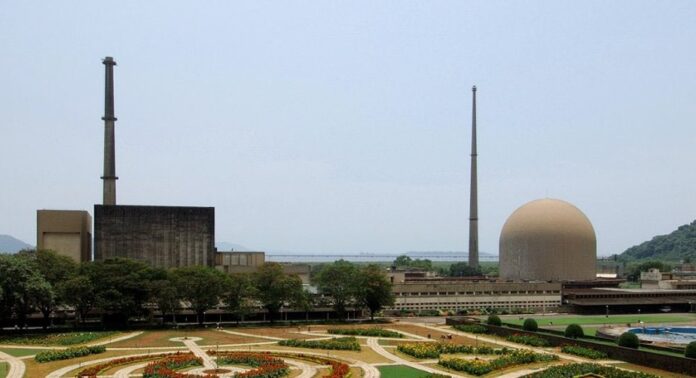
Die has been cast for ambitious Molten Salt Reactor (MSR) technology for third and final stage of India’s nuclear programme.
The MSR nuclear reactor is based on thorium-based raw material that India has its largest deposits on this planet.
The aim by Department of Atomic Energy (DAE) is to indigenous thorium-based technologies while ensuring long-term energy security, and to achieve self-reliance in the nuclear fuel cycle.
To optimally utilise the limited uranium resources and exploiting the large thorium reserves for achieving long term energy security in a sustainable manner, DAE is pursuing Three Stage Nuclear Power Programme.
The programme is based on closed fuel cycle, wherein the spent fuel from one stage is utilised for extracting the fissile material, to be used as fuel in the next stage.
DAE has developed expertise in reactor design, manufacturing, construction and front-end and back-end fuel cycle technologies of Pressurised Heavy Water Reactors (PHWRs) deployed in the first stage of the nuclear power programme.
The fissile material, plutonium, extracted from the spent fuel from domestic PHWRs is used as fuel for the second stage of nuclear power programme.
Bhabha Atomic Research Centre (BARC) has successfully developed indigenous capabilities and implemented the back-end fuel cycle technologies including fuel fabrication.
The back-end fuel cycle plants are operational at Tarapur and Kalpakkam.
In addition, Integrated Nuclear Recycle Plant (INRP) at Tarapur and the Fast Reactor Fuel Cycle Facility (FRFCF) at Kalpakkam are under construction for reprocessing, waste management of spent fuel from PHWRs and Fast Breeder Reactors (FBRs) respectively.
The PFBR attained its first criticality in 6th April 2026, marking India’s entry into the second stage of the programme.
The third stage envisages use of U-233 bred from Th-232 as fuel. In this regard, the Department has undertaken sustained research and development for thorium utilisation.
Thorium Oxide (Thoria) pellets have been used in the initial cores of operating PHWRs, and Thoria-based fuels have been irradiated in BARC research reactors.
The irradiated Thoria pins have been reprocessed to obtain uranium-233, which has been fabricated as fuel for Kalpakkam Mini Reactor (KAMINI) reactor at Indira Gandhi Centre for Atomic Research (IGCAR), Kalpakkam.
For India’s nuclear program, a Molten Salt Reactor (MSR) represents a pivotal, next-generation technology.
Developed primarily as the Indian Molten Salt Breeder Reactor (IMSBR) by the BARC, it serves as a critical technological pathway for the third stage of India’s iconic three-stage nuclear power program.
The Core Technology
Unlike traditional nuclear reactors that use solid fuel rods cooled by high-pressure water, an MSR uses a liquid fuel system. In the IMSBR design:
- Liquid Fuel & Coolant: The nuclear fuel (fissile and fertile materials) is dissolved directly into a molten fluoride salt mixture. This fluid acts as both the fuel and the primary coolant as it circulates through the reactor core.
- Low-Pressure Operation: MSRs operate at near-atmospheric pressure. This eliminates the risk of high-pressure explosive pipe bursts seen in conventional light-water reactors.
Strategic Meaning for India’s Nuclear Program
- Unlocking India’s Thorium Wealth
India holds roughly 1.07 million tonnes of thorium, making it one of the largest repositories globally. Because thorium-232 is “fertile” and cannot sustain fission on its own, it must absorb neutrons to transform into fissile Uranium-233 (²³³U). The MSR is uniquely suited for this cycle because its liquid state allows for online chemical reprocessing. Impurities and byproducts can be continuously filtered out without shutting down the reactor, drastically improving neutron efficiency and accelerating the breeding of ²³³U.
MSRs possess an inherent, physics-driven safety feature.
If power fails or the reactor overheats, a freeze plug made of solid salt at the bottom of the reactor melts.
The liquid fuel automatically drains by gravity into subterranean dump tanks, immediately stopping the nuclear reaction without requiring human intervention or electrical power.
2, High-Efficiency and Clean Energy Goals
Operating at extreme temperatures (~ 650°C to 750°C), MSRs offer higher thermodynamic efficiency. India intends to couple the IMSBR with a Super-critical CO₂ based Brayton cycle for electricity generation rather than traditional steam turbines, drastically increasing power output and minimizing industrial waste footprints.
Current Developmental Status
While the technology holds immense promise, it is still in the developmental phase:
- However, this technology is not yet matured and economic implications of deploying the technology can be examined, once it is demonstrated in a limited scale.
- Indian defense and materials public sectors (like MIDHANI) have successfully developed indigenous high-nickel alloys capable of resisting the corrosive nature of hot molten fluoride salts over decades of operation.