
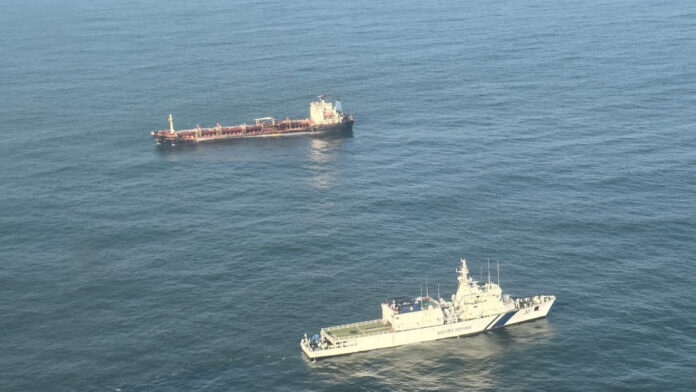
The Indian Coast Guard (ICG) successfully averted a major maritime emergency after responding to a distress situation aboard the Belize-flagged chemical tanker MT Seagull 9 approximately 37 nautical miles east-southeast of Paradip, Odisha.
The vessel, carrying 9,000 metric tonnes of palm oil and crewed by 23 personnel, transmitted an emergency distress call at around 7:30 am on September 27, 2026, following a main engine failure and rapid flooding of a ballast tank. The incident caused a significant list, raising concerns over the vessel’s stability and the risk of capsizing.
Responding swiftly, the Coast Guard deployed ICGS Vishwast to the scene. A specialised Damage Control Team boarded the stricken tanker and initiated emergency measures to stabilise the vessel.
The team deployed submersible dewatering pumps, stopped the flooding, sealed two damaged seawater pipelines, and contained a third fractured line. Their timely intervention successfully eliminated the immediate threat of capsizing.
To strengthen the response effort, the Coast Guard diverted a Pollution Control Vessel (PCV) and an additional Offshore Patrol Vessel (OPV) to the area. Simultaneously, Dornier aircraft operating from Bhubaneswar conducted real-time aerial surveillance of the situation.
A minor sheen of palm oil observed near the vessel on September 27 was monitored closely. Follow-up aerial sorties on September 28 confirmed that the sheen had completely dissipated. Nevertheless, pollution-response measures remain in force to safeguard the marine environment.
Following the successful stabilisation of the tanker, the Paradip Port Authority tug Dolphin took MT Seagull 9 under tow towards the anchorage area off Paradip.
ICGS Vishwast, along with other deployed Coast Guard assets, continues to maintain a vigilant presence in the area, providing operational support and monitoring the vessel’s safety as it proceeds towards port.